Skip to content
seostack

The platform

Every tool in SEO Stack, included on every plan

SEO Stack gives you 30 tools covering warehoused Search Console data, GA4 analytics, keyword discovery, content auditing, technical crawling and AI visibility tracking, and because every plan includes every tool, the only thing that changes as you move up a plan is how many websites you connect and how far back your data goes.

  • 100% data privacy
  • 99.99% uptime
  • Nothing to configure
  • Export anytime, no limits
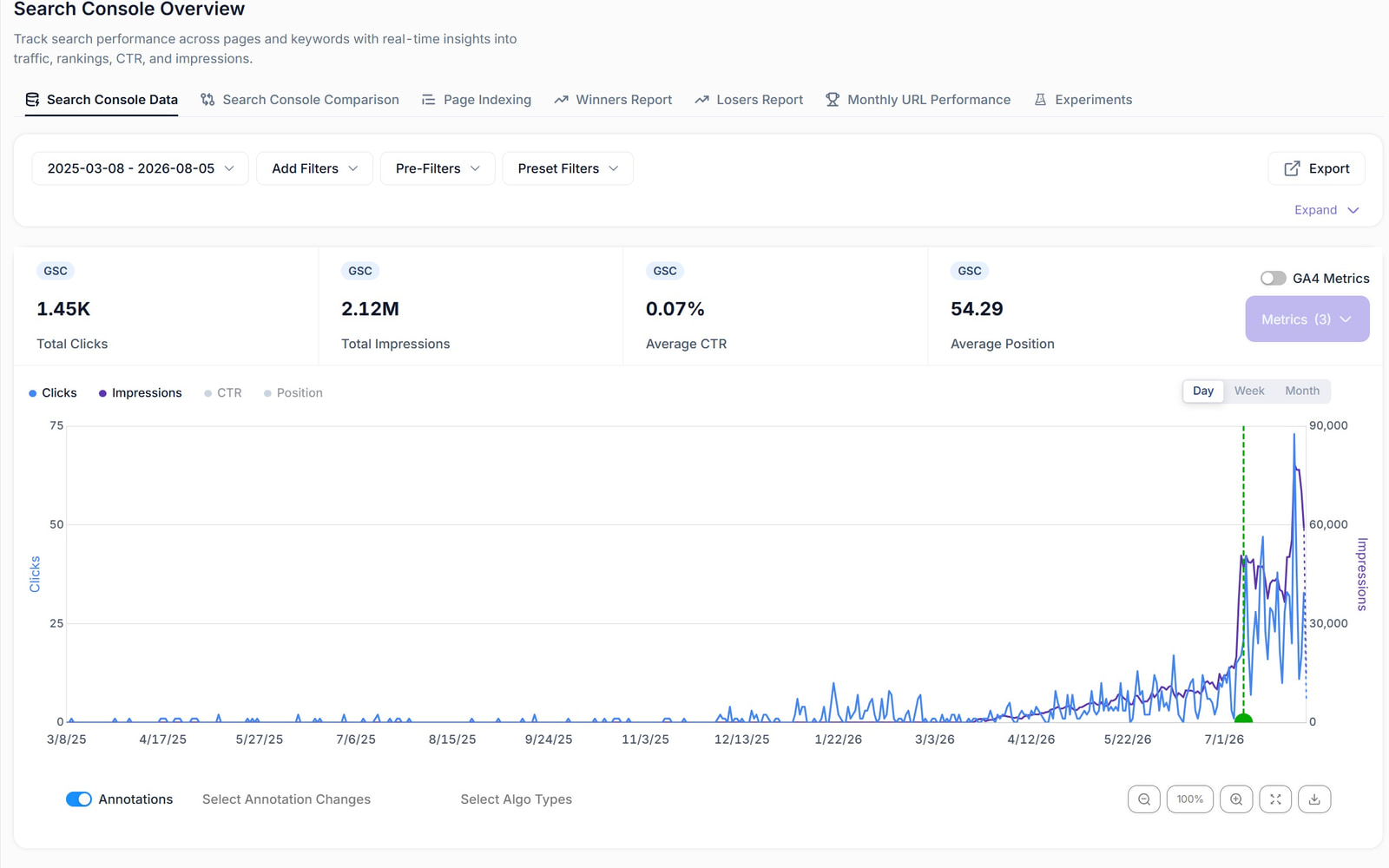
Search Console Data in SEO Stack, showing clicks and impressions over a date range far longer than Google allows
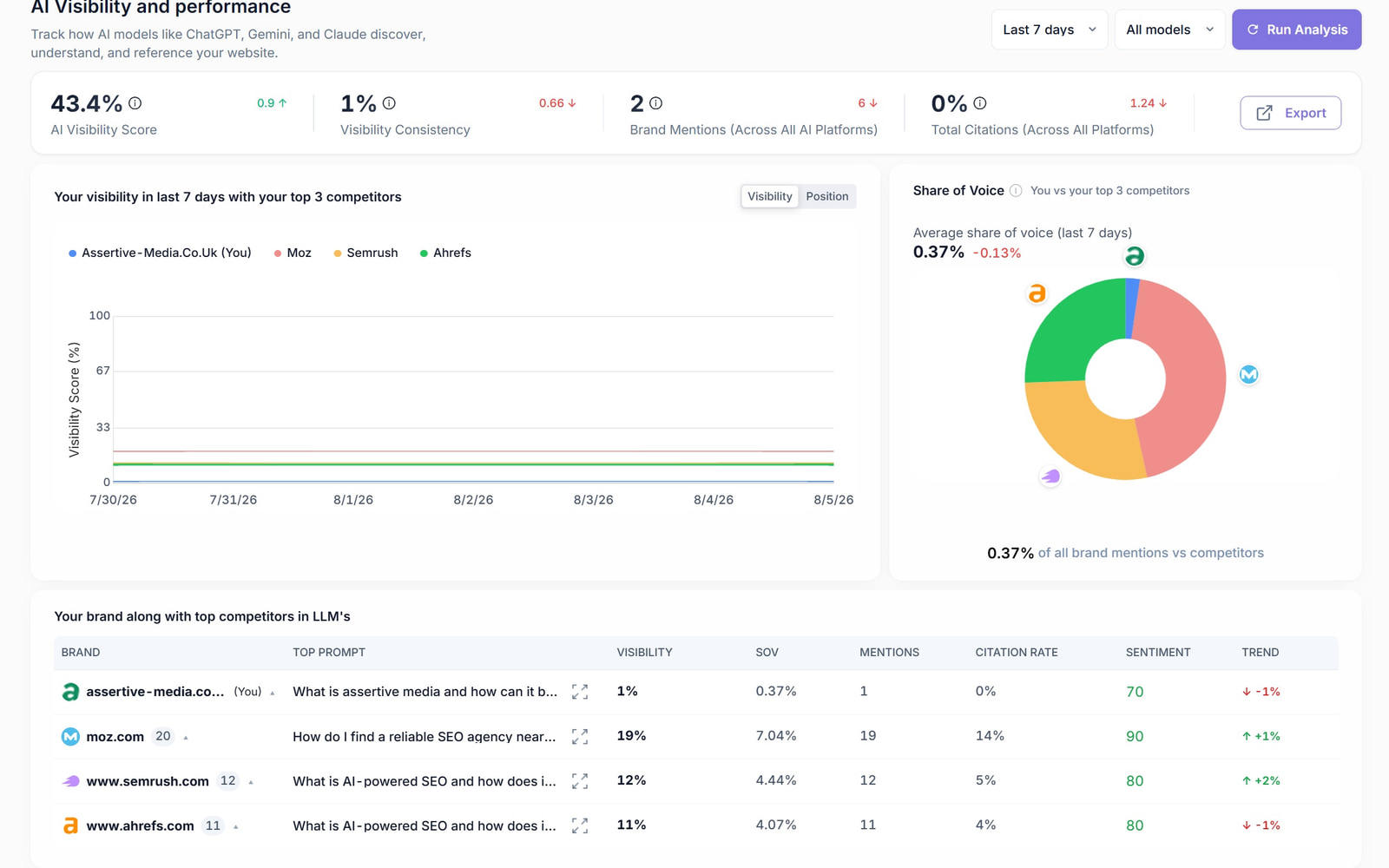
The AI Visibility dashboard, tracking visibility score, share of voice and competitor citations across AI platforms
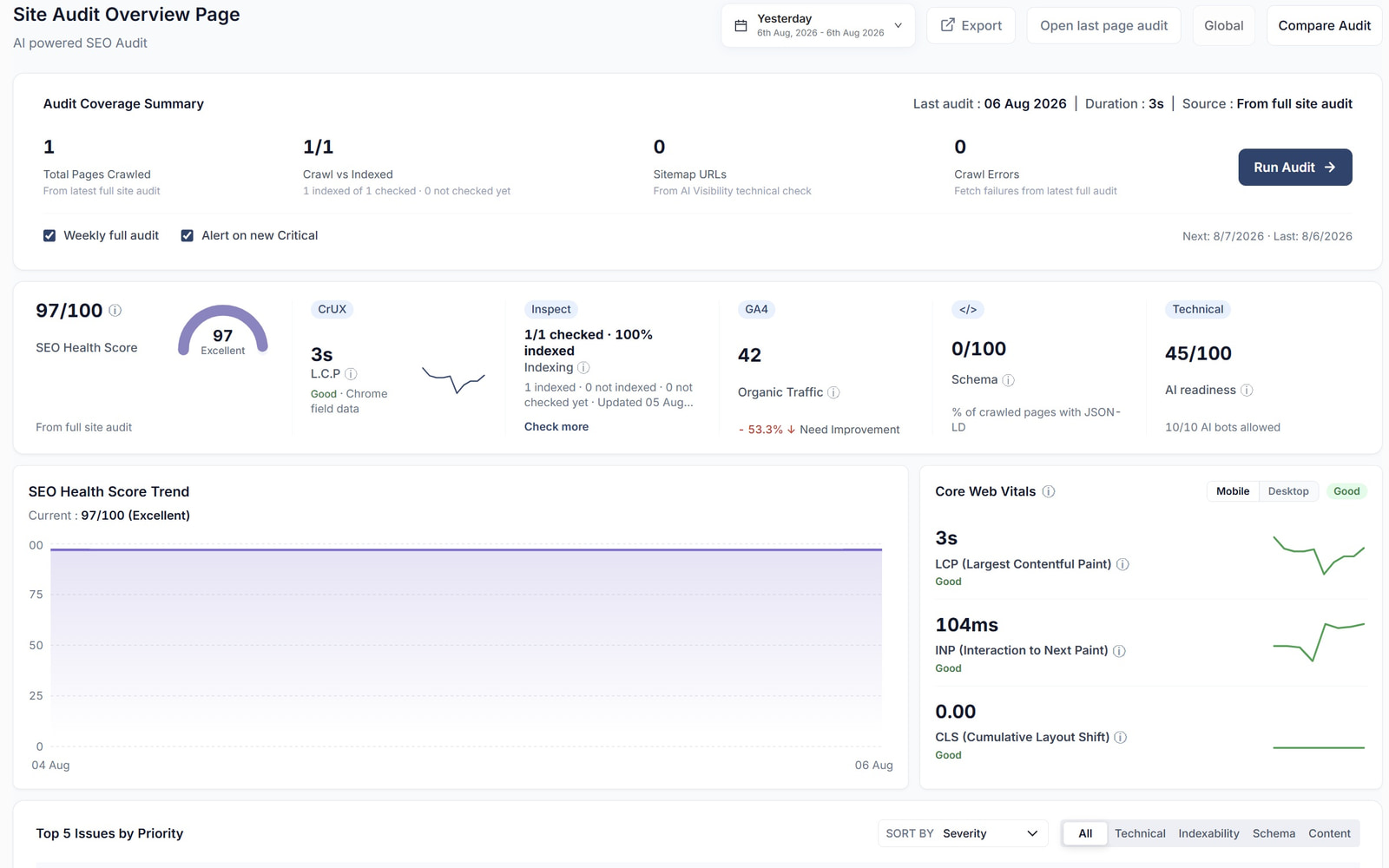
The SEO Site Audit, with a crawl health score and the issues found across the site

Trusted by over 5000 Users + Brands:

Why a platform, not a pile of point tools

One subscription, one dataset, one place to work

Running SEO through five different subscriptions means five different definitions of a click, and a lot of exporting between them. SEO Stack warehouses your Search Console and GA4 data once, then every tool on this page reads from it.

Every tool on every plan

There are no feature gates in SEO Stack, so the smallest plan gets the same 30 tools as the largest one, and the only things that change as you move up are how many websites you connect and how far back your warehoused history goes.

Built on your own first-party data

Everything in the platform is derived from your own Search Console and GA4 properties rather than from scraped estimates or a third-party index, so the numbers you are making decisions on are the numbers Google actually recorded for your site.

AI that does the reading for you

AI insights, recommendations and the assistant are built into the same tools you are already working in, so when something looks wrong on a chart you can ask about it there and then, rather than exporting the data somewhere else to work it out.

Bring your own AI agents

The MCP server opens your warehoused data up to ChatGPT, Claude and anything else that speaks MCP, so an agent can pull years of query and page data in a single request instead of paging through Google's API until it runs out of context.

tools, all included
30tools, all included
of warehoused history
10+ yrsof warehoused history
rows on every table
Unlimitedrows on every table
filters you can layer
1,000filters you can layer
AI & LLM Visibility5 tools

See how AI answers talk about your brand, then do something about it

More and more of the questions that used to begin with a Google search are now answered inside ChatGPT, Gemini, Claude or an AI Overview, so when those answers recommend somebody else, that is demand you will never see in a rankings report. SEO Stack tracks the prompts that genuinely matter in your market, who gets cited, how often you get mentioned and what the sentiment looks like, and the AI Assistant works directly on your own warehoused data so you can ask it what changed and why.

  • Visibility, citations, share of voice and sentiment tracked across the main AI platforms
  • Prompt research showing which questions your competitors are winning, and the pages being cited
  • An AI Assistant that answers questions about your own data instead of handing you another dashboard
  • An MCP server, so your own agents and AI subscriptions can read the same data
The AI Visibility dashboard in SEO Stack, showing visibility score, share of voice and competitor citations
Discovery & Opportunity8 tools

Find the clicks you are already close to winning

Most sites are carrying a lot of queries that rank just outside the positions which earn clicks, and because Search Console hides the long tail behind a row limit, those queries usually never get looked at. The discovery tools group everything by position band, intent and topic, forecast what a page would earn at a better click-through rate, and count how many queries a URL is picking up over time, so you can tell the difference between losing rankings and simply being served for fewer searches.

  • Position bands and striking distance, built from your own data rather than a scraper
  • Click forecasting, so you can put a number on what a change is worth before you make it
  • Query counting and trajectory, which separates a ranking drop from a drop in how often you are served
  • Intent analysis and keyword clouds for understanding what a page is genuinely about
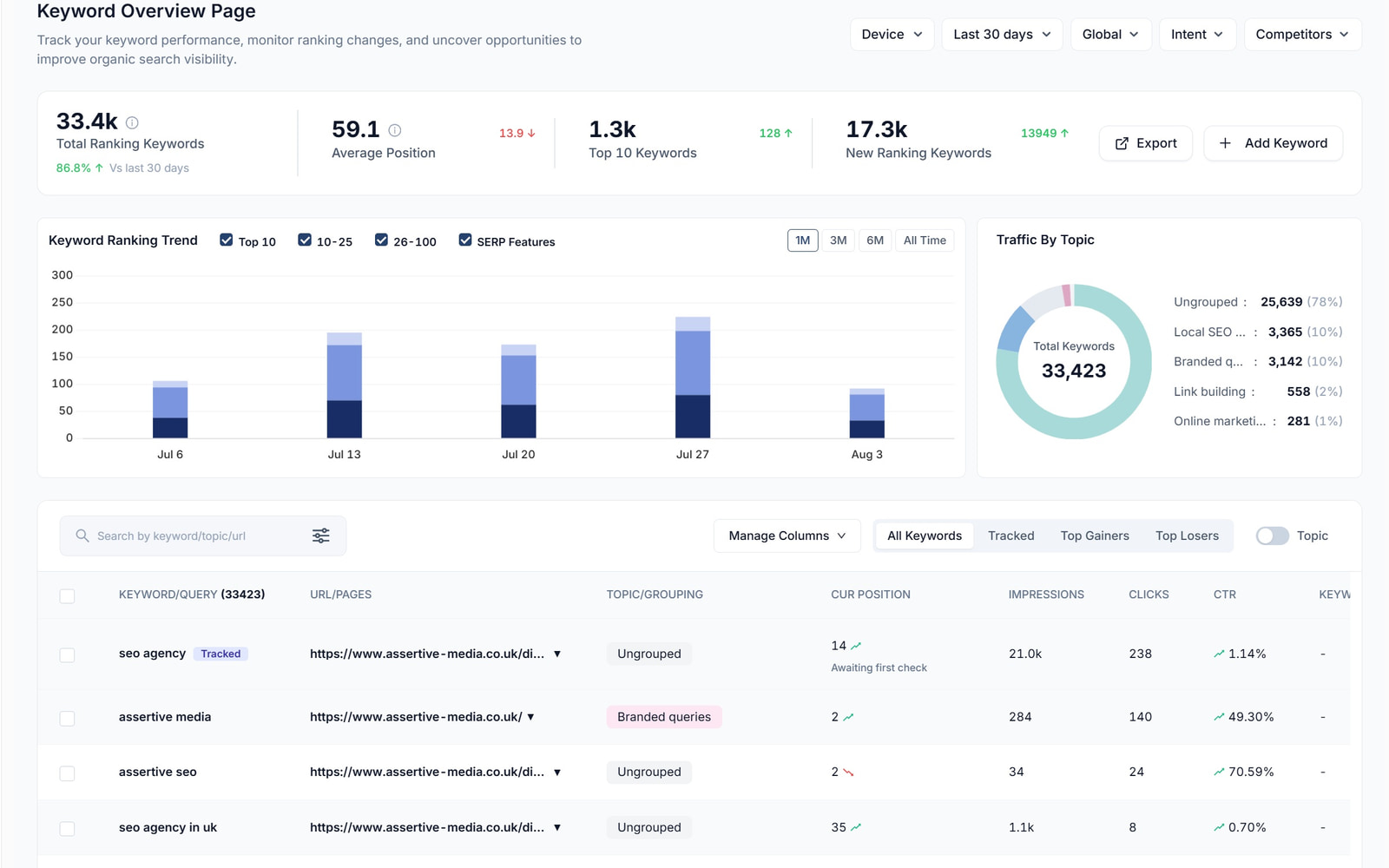
The Keywords Overview in SEO Stack, showing position distribution and ranking trend by band
Content & Optimisation6 tools

Work out which pages are letting you down, then fix them in the same session

Content decisions usually get made on a hunch, whether that is deciding a page needs rewriting, consolidating or removing altogether, and the cost of getting it wrong is either wasted effort or lost traffic. SEO Stack scores your pages against the query you actually want them to win, groups every URL by how it is performing, flags the weak and dead ones with page age factored in, and then lets you write the brief, rewrite the titles and edit the content without leaving the platform.

  • NLP briefs scored against the entities, topics and SERP for your target query
  • An AI content auditor that grades a page against the query it is meant to answer
  • Real time content auditing, grouping every URL into performance bands
  • Title rewriting and a content editor, so the fix happens where the analysis happened
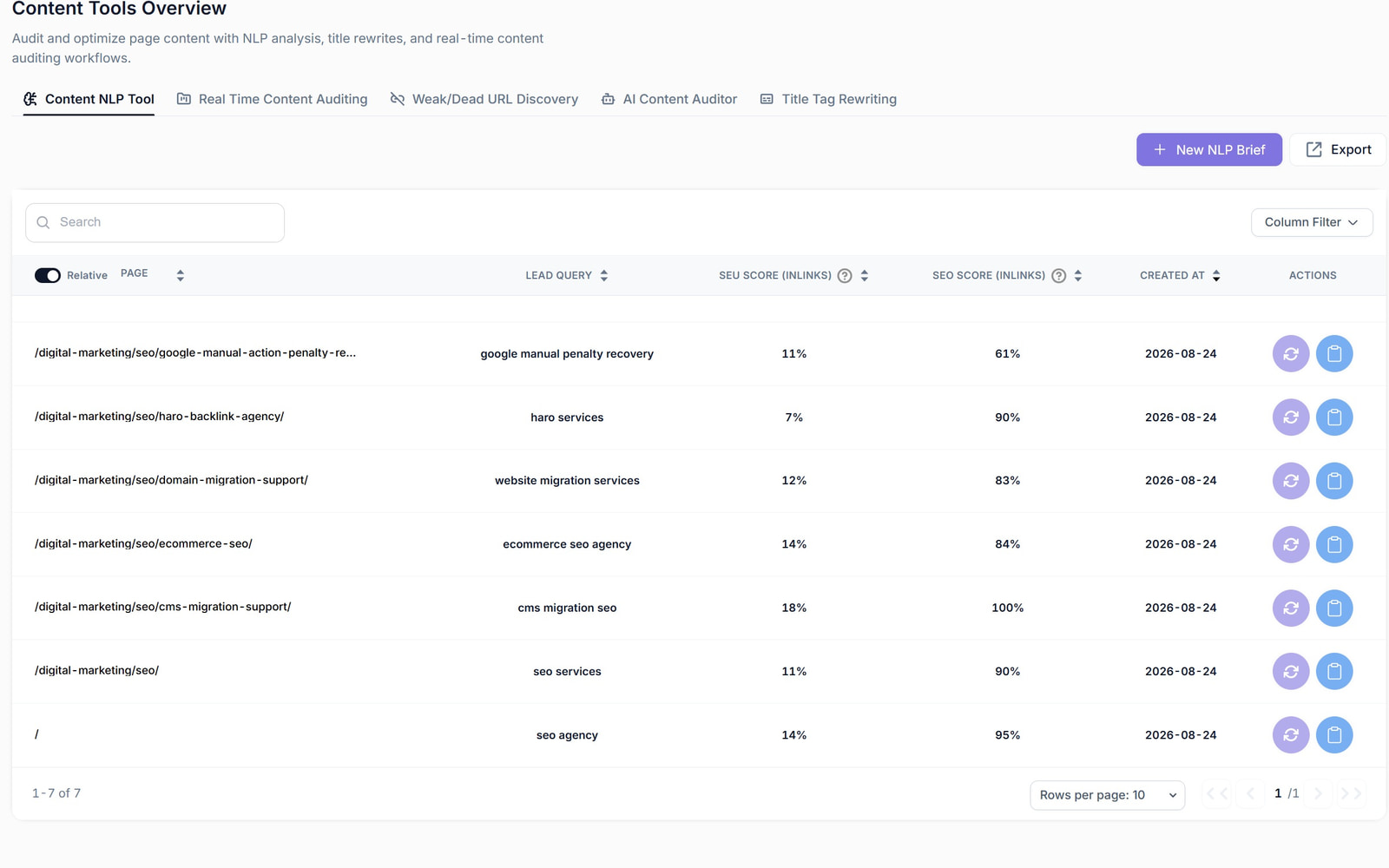
The Content NLP tool in SEO Stack, scoring topical coverage against a target query
Search Console Data5 tools

The Search Console you always wanted, without the limits

Google deletes your performance data after 16 months and only ever shows you a thousand rows at a time, which is usually why the long tail, where most of the genuine opportunity can be found, is invisible in the interface you are given. SEO Stack starts warehousing every row the moment you connect a property, so you can go back years rather than months, layer filters that Search Console will not let you combine, and read GA4 metrics alongside the same table without exporting anything into a spreadsheet.

  • Unlimited rows on queries, pages, countries, devices and search appearance
  • Up to 10+ years of warehoused history, depending on your plan
  • Up to 1,000 layered filters, including regex and negations that GSC will not combine
  • GA4 sessions, bounce rate, revenue and transactions rendered next to your GSC data
Search Console Data in SEO Stack, with annotations on the chart and the full query table underneath
Technical & Auditing3 tools

Find what is broken before it costs you rankings

Technical problems rarely announce themselves, they just hold a site back without anybody noticing, and by the time it shows up in the performance chart you have usually lost a few months to it. SEO Stack crawls and renders the site, scores its health, checks how AI crawlers are treating it, inspects URLs at a scale the Search Console API will not allow, and then turns all of that into a prioritised list of recommendations telling you what to fix first and why it matters.

  • Full crawl and render, with a health score and issues broken down by severity
  • URL inspection at scale, past the 2,000 a day the API caps you at
  • AI crawler checks, so you know whether the models can actually read your pages
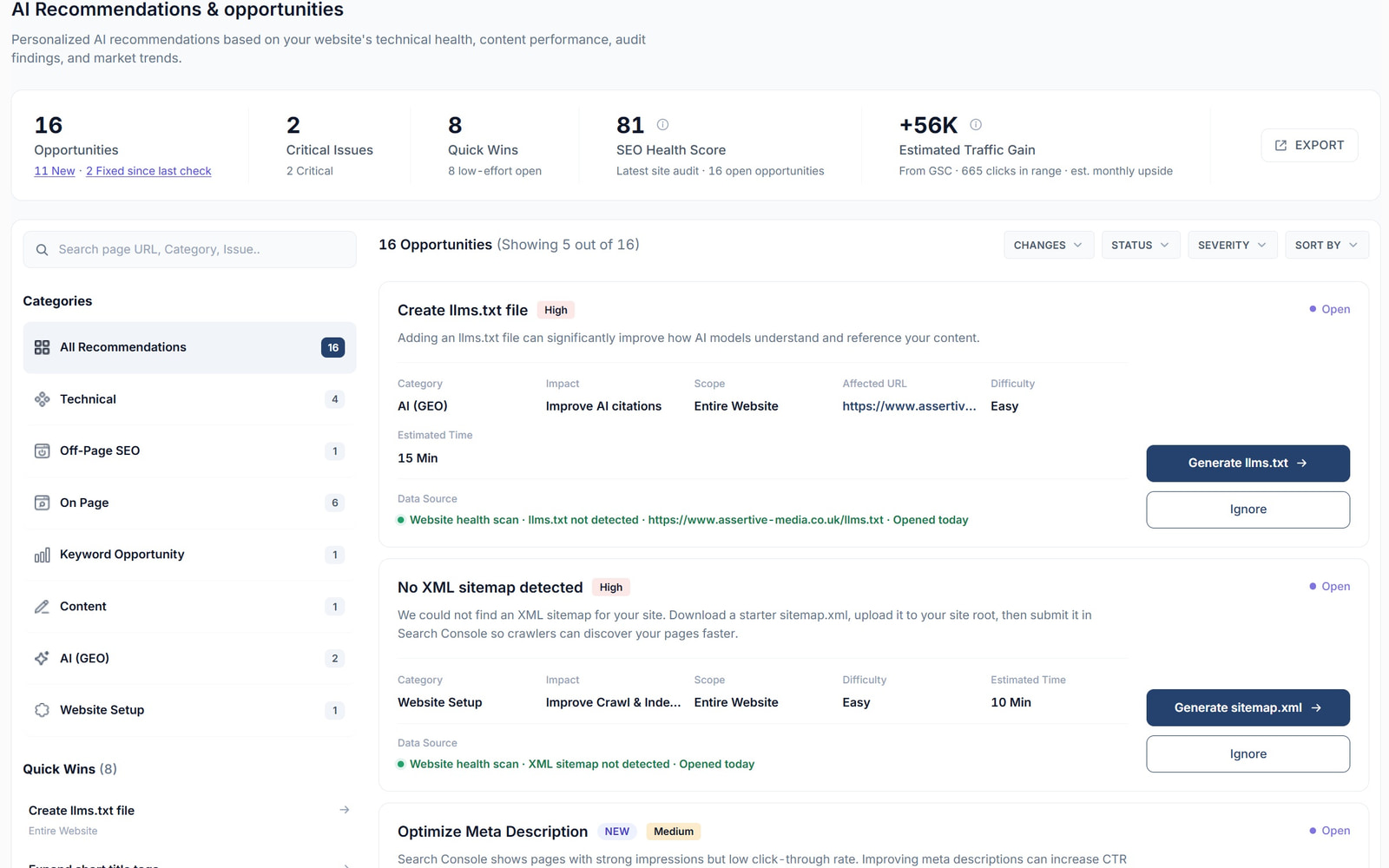
  • Recommendations that are prioritised and tied back to the data that produced them
The SEO Site Audit in SEO Stack, with a crawl health score and issues by severity
Workflow & Delivery3 tools

Log what you changed, then prove what it did

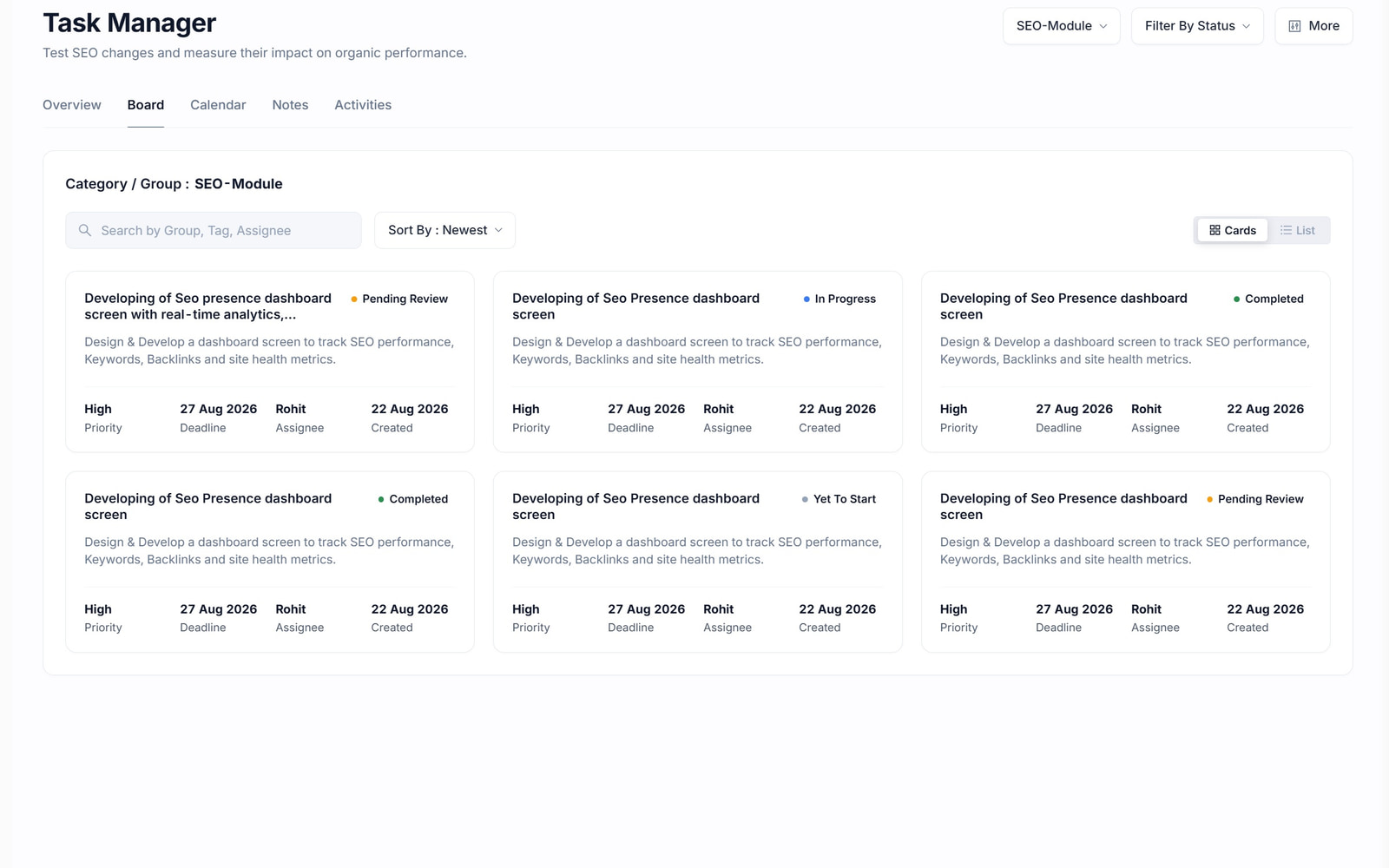
Most website changes are deployed without a meaningful way of tracking impact, whether you have redesigned a homepage, changed your internal linking or rewritten a set of templates, and a few months later nobody can say with any confidence whether it worked. SEO Stack lets you annotate every change directly onto the performance chart, connect those annotations to the tasks your team is working through, and then read the AI analysis of what actually moved, which is usually the difference between reporting activity and reporting results.

  • Annotations overlaid on your performance data, with Google core updates marked alongside them
  • A task board and calendar, so the work and the evidence live in the same place
  • Team access and delegation, for agencies and in-house teams alike
  • AI analysis telling you which changes helped, and which did not
The task board in SEO Stack, with tasks connected to annotations on the performance chart

How it compares

The honest version of how SEO Stack stacks up

Every one of these does something well, and each one is missing something you will eventually need, so the comparisons below set out what you get and what you give up rather than pretending the alternatives are useless.

Pricing

From one website to two hundred

Every plan includes every tool. You're choosing how many sites you connect and how far back your history reaches.

Basic

$129.99/mo

10 websites

60-month warehousing

Pro

$349.99/mo

30 websites

60-month warehousing

Agency

$679.99/mo

200 websites

120+ month warehousing

Connect a property. Watch the data start stacking.

Warehousing begins the moment you connect your Search Console property, there is no Google Cloud project to set up, no BigQuery and no schema to design. You simply connect your property and SEO Stack starts storing every row of your data from that day onwards.

  • Credit card required
  • Cancel within the trial and you won't be billed
  • No contracts