Limitation 01
The 1,000-row wall
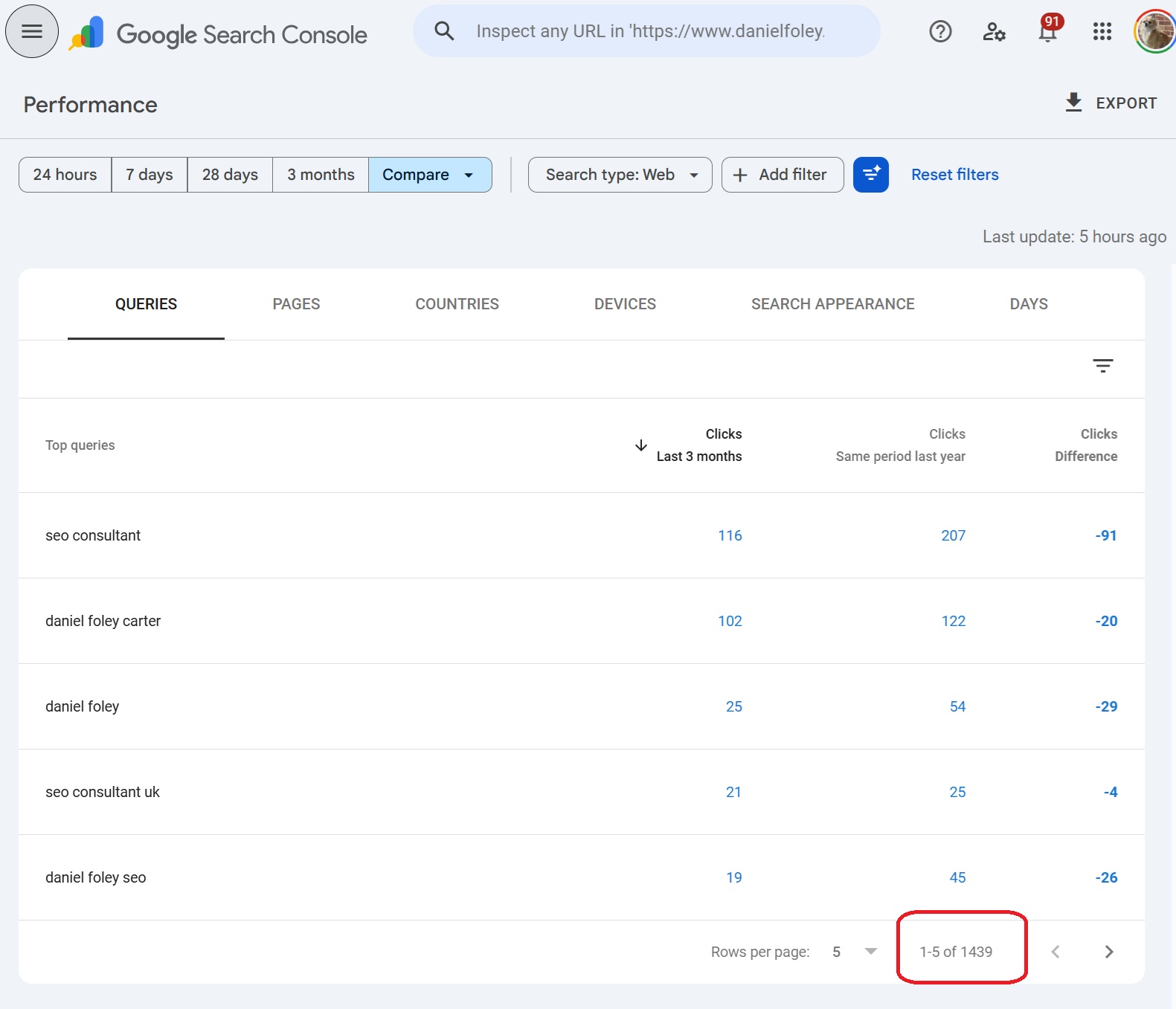
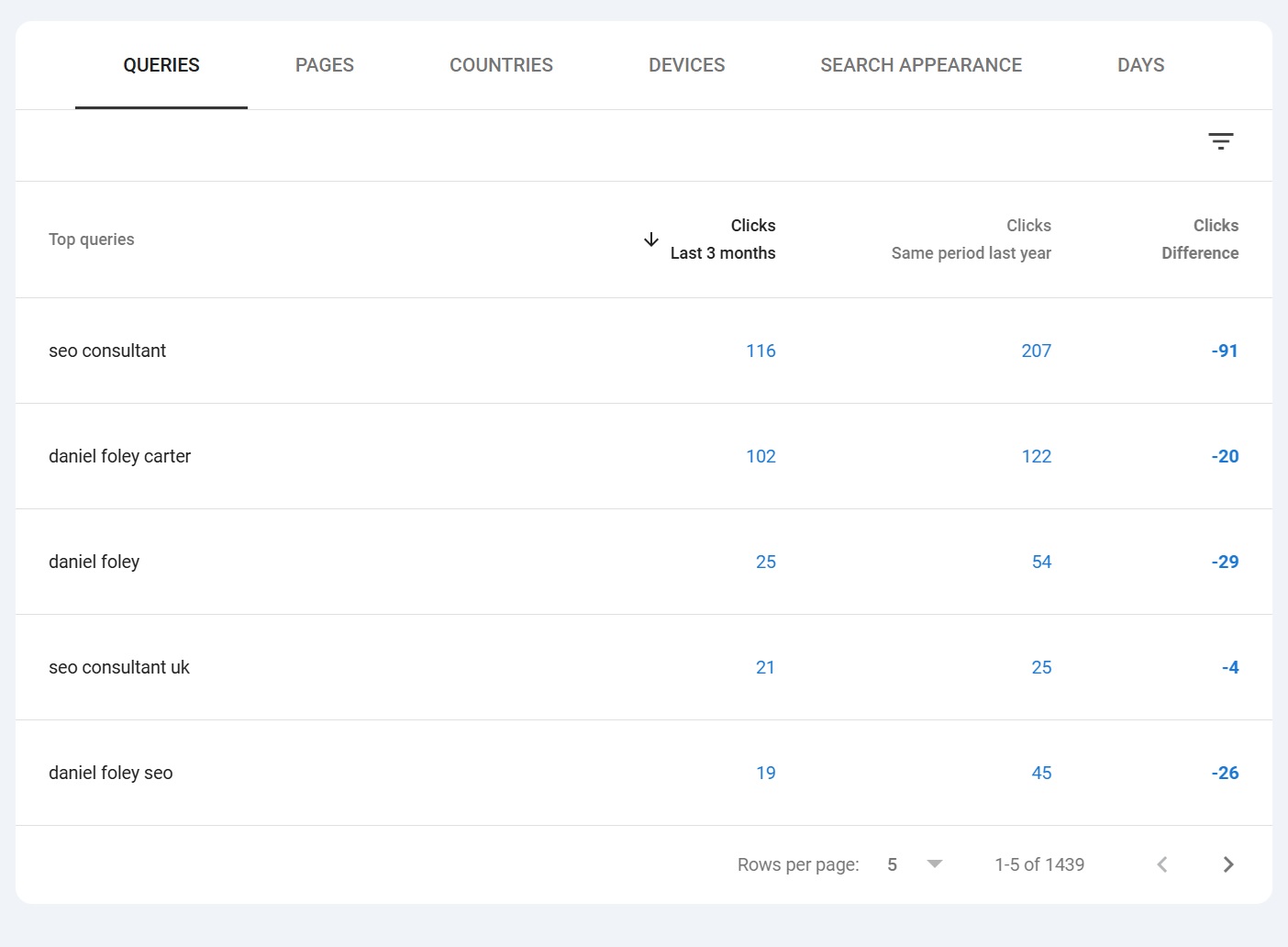
This is the main issue that impacts SEOs, especially those auditing. The GSC interface and any export you pull from it is capped at 1,000 rows, ordered by clicks and impressions. For comparison data sets, queries are usually capped below 1,700 - for most, a huge majority of comparison data is omitted from exports.
If your site ranks for more than 1,000 queries (most do, even small ones), or has more than 1,000 indexed URLs, your comparison is silently truncated. The group of queries that dropped 90% after the last Google core update might sit at row 1,400, so it's omitted and you never know it moved. Any filtering you do in the UI is just client-side JavaScript running over those first 1,000 rows, not a fresh pull of your full dataset.
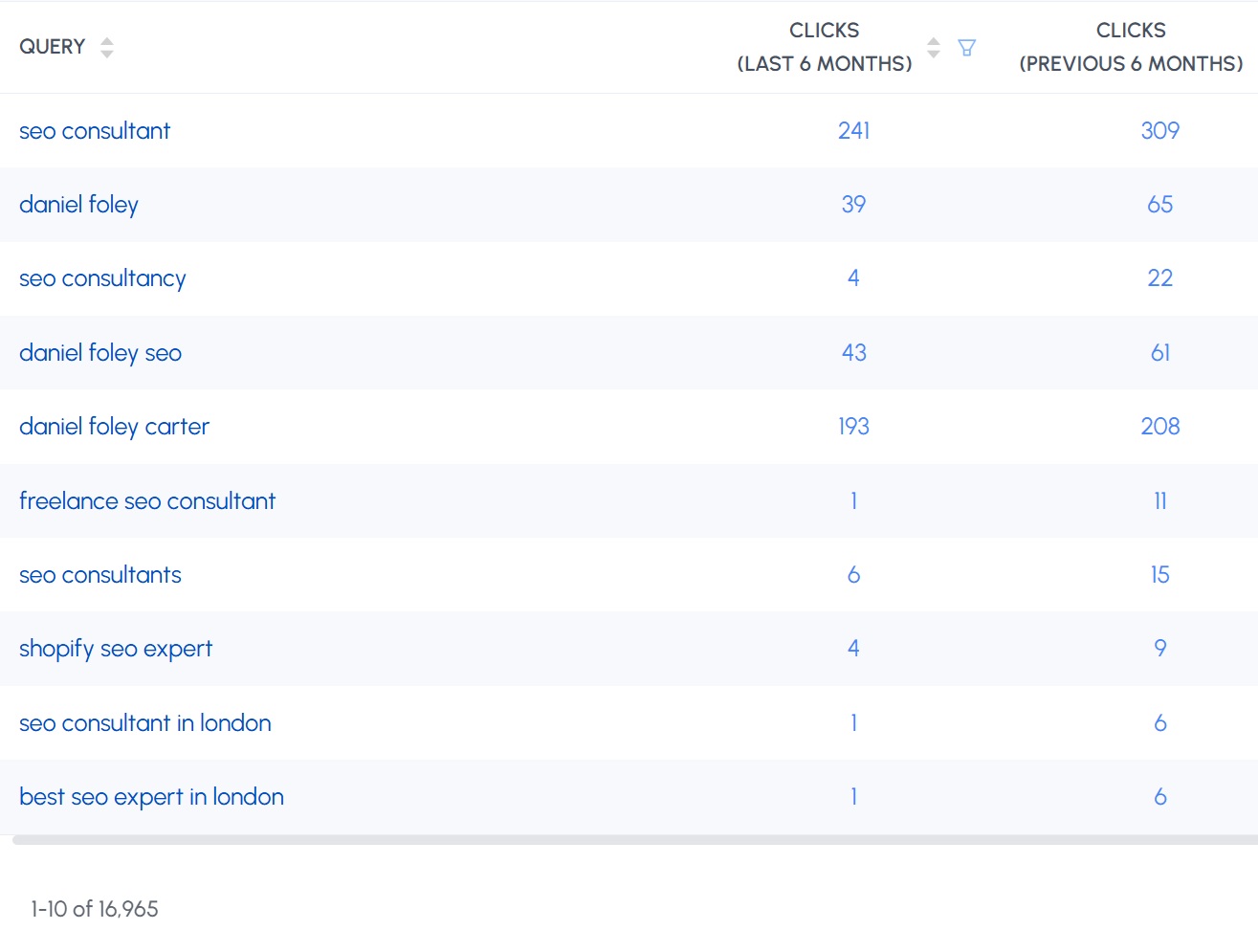
You can work around it with the Search Console API (up to 25,000 rows per call, 50,000 per day), but that means writing code, handling OAuth, managing quotas and standing up a database - a genuine headache. SEO Stack removes this limit entirely.
Limitation 02
The 16-month memory hole
GSC keeps performance data on a strict 16-month rolling window, so for every day you gain is a historic day you lose. Every day a new day is added and the day from 16 months + 1 ago is permanently deleted. There is no archive and no recovery unless you have Google BigQuery set up.
That has two key consequences for comparison:
- You can't compare anything older than 16 months, so any genuine multi-year trend, or a comparison back to a core update, migration or rebrand two years ago, is gone.
- True year-over-year comparison is squeezed into a ~4-month overlap (12 months back + 4 = 16), so meaningful YoY analysis is far narrower than people assume.
If you didn't export it before Google deleted it, it no longer exists.
Limitation 03
Equal-length periods only
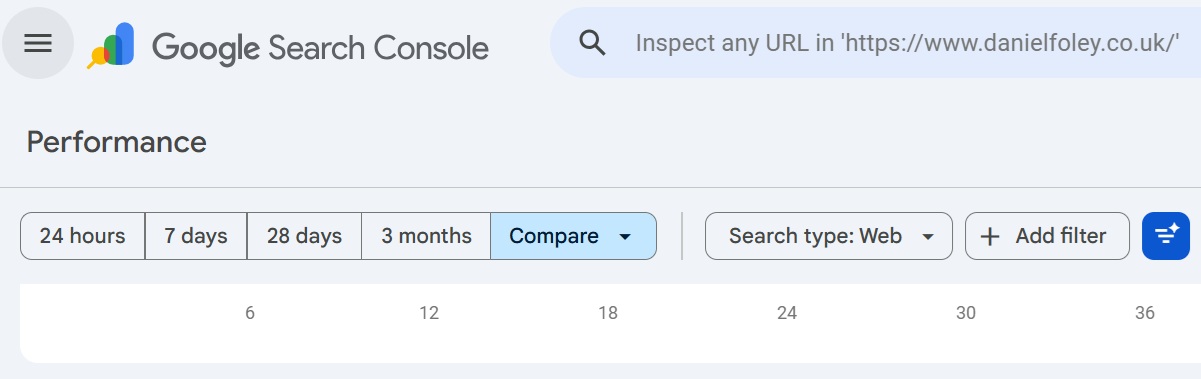
GSC's comparison requires the two periods to be exactly the same length. You can't put a 3-month window against a 6-month window, or compare an irregular promotional period against a clean baseline. You have to match the dates exactly - which can be slow and clunky to configure.
This forces artificial constraints on your analysis. Real-world SEO questions rarely fit into equal-length date boxes, and GSC gives you no flexibility to work around it.
Limitation 04
No context on the timeline
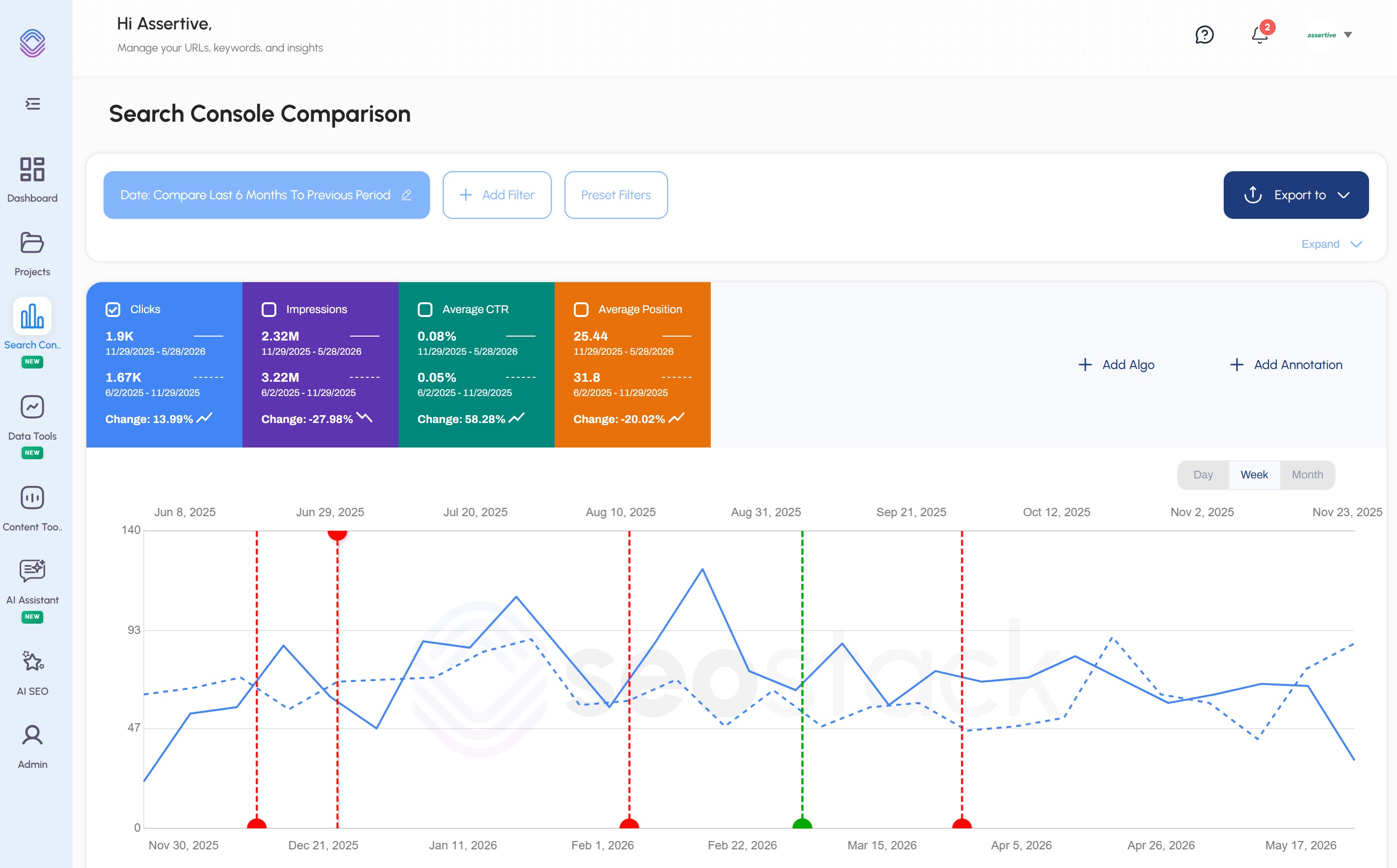
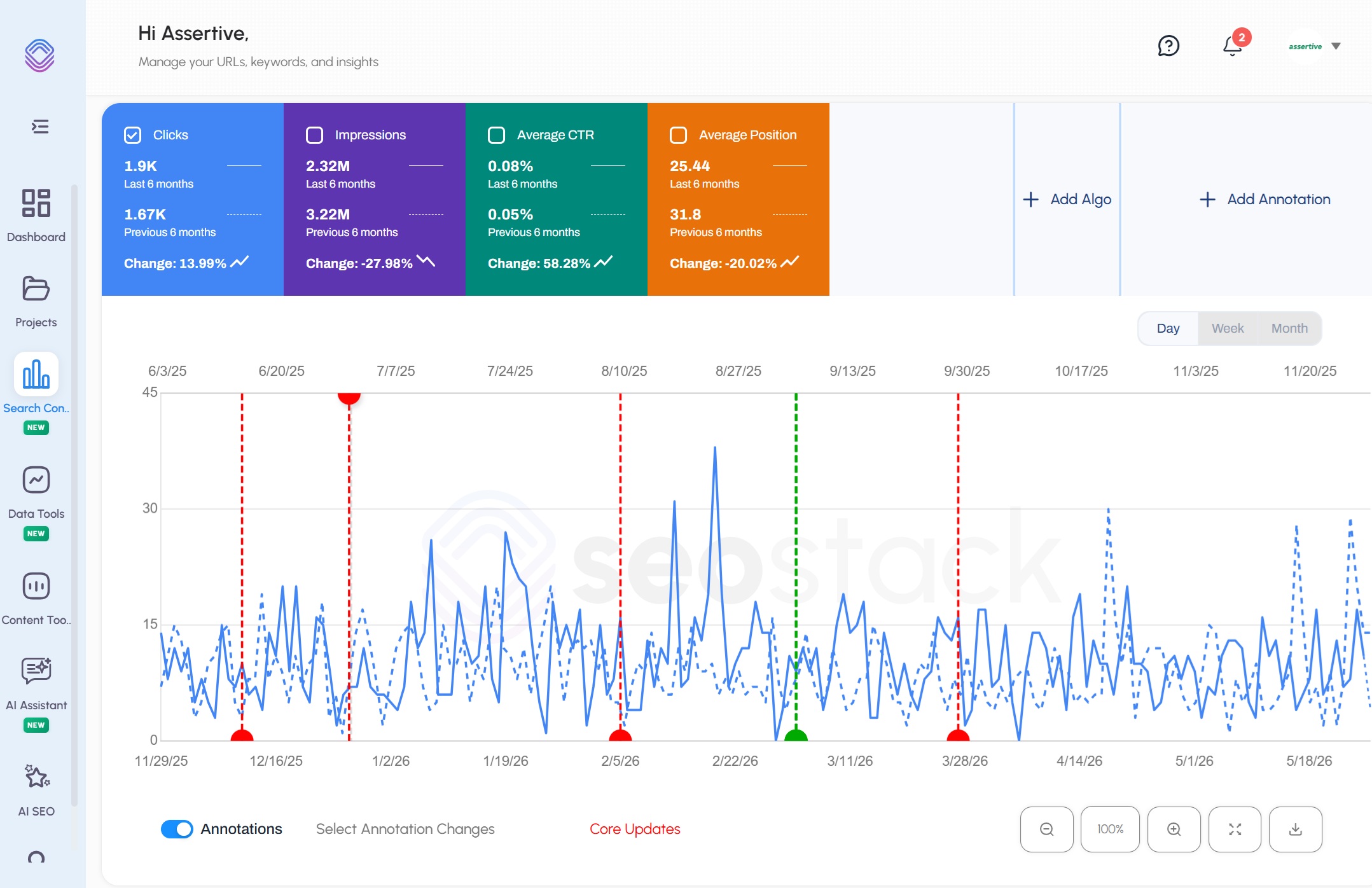
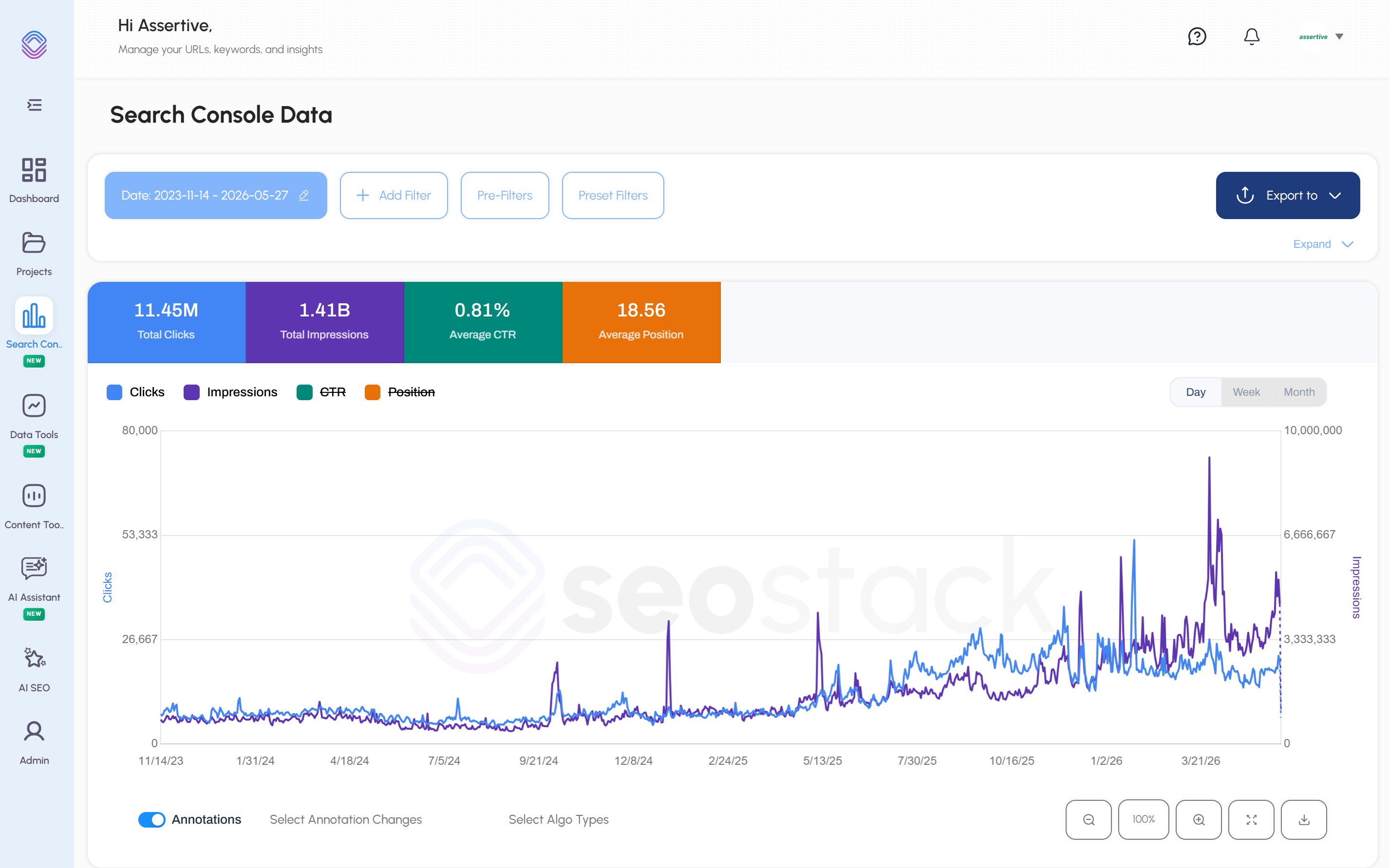
GSC won't tell you why something moved. There are no annotations for the changes you made - be it content rewrites, redirects, technical fixes - and no overlay of Google's algorithm updates. So when clicks fall off a cliff on a given week, you're left to figure it out yourself.
Whilst GSC now supports annotations, they're super generic and not URL-specific. You can't see whether a drop aligns with a core update, a crawl spike or a change you made to the page - you're just looking at numbers with no story attached.
Limitation 05
Missing the data that explains the drop
The comparison shows clicks, impressions, CTR and position - and that's it. It won't let you know that a URL is now returning a 404 or a redirect, when a page last received a click, or how click share is distributed across your URLs.
When a page disappears from comparison results you don't know if it's a technical issue, a de-indexation, or simply a ranking collapse. The data you need to diagnose the drop isn't in GSC's comparison view at all.
Limitation 06
No trend lines, no analysis
The difference column is raw numbers - there's no trend visualisation across the comparison like there is in SEO Stack, and nothing that interprets the movement for you such as SEO Stack's AI assistant.
Finding which keywords dropped out entirely, which pages disappeared, or which pages are brand new is manual, row-by-row detective work that takes time and costs money. There's no signal separation between noise and genuine ranking movement, and no way to surface the patterns that actually matter without doing it all yourself.